
What an ADU Really Costs in Washington
Svensen ·
Washington rewrote the rules on backyard housing, and the math changed for a lot of homeowners overnight. Here’s what a detached ADU actually costs to build in 2026, what drives the number, and how the state’s new law affects your project — from a builder that owns the sawmill and can hold a price.
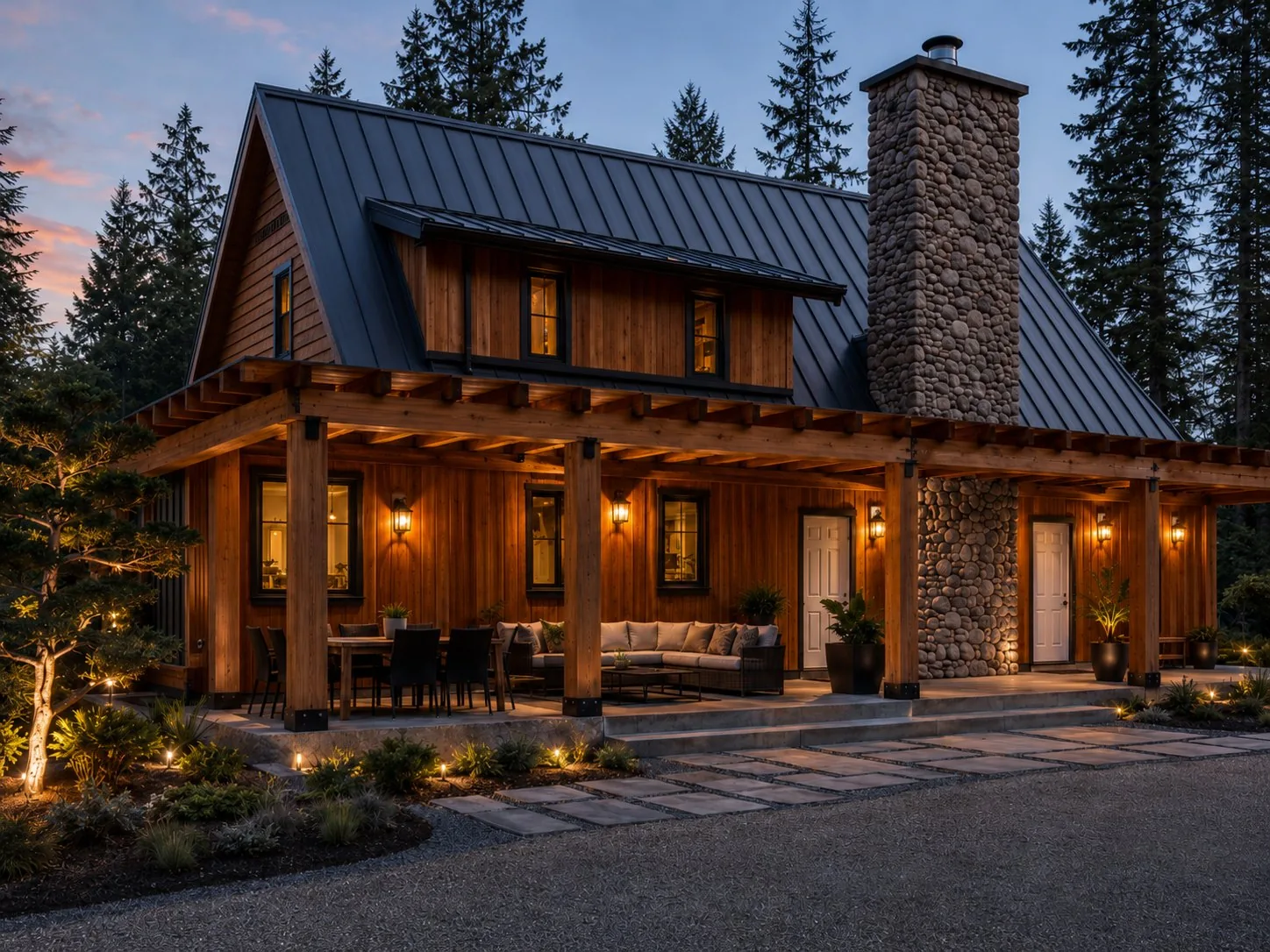
A few years ago, building a backyard cottage in Washington meant fighting your city for permission, promising to live on-site, and paving a parking space you didn’t want. Then the state changed the law, and the backyard quietly became the most valuable square footage on a lot.
The question we hear every single week is simple: what does an ADU actually cost?
Here’s the honest, current answer — including the parts most builders don’t put in writing.
First, the law: what HB 1337 actually changed
You can’t talk about ADU cost in Washington without understanding House Bill 1337, because it’s the reason this is even a conversation. Signed in 2023 and with cities required to comply by mid-2024, it’s one of the strongest ADU laws in the country. What it did:
- Two ADUs per lot. In urban growth areas, cities must allow at least two accessory dwelling units on a single-family lot — you can build an attached ADU and a detached backyard unit.
- No owner-occupancy requirement. You no longer have to live on the property to build or rent an ADU. Both the main house and the ADU can be rentals.
- No off-street parking mandate near transit. Cities can’t force you to add a parking space if you’re near a major transit stop — which used to add thousands to a build.
- Minimum size protected. Cities can’t cap ADUs below 1,000 square feet, and can’t limit height below 24 feet — which is what makes a two-story DADU possible.
- Condoization allowed. In many cases a detached ADU can be sold separately from the main home.
The practical effect: a single lot can now carry the primary residence plus rental income, and the state has taken away most of the tools cities used to say no. That’s why ADU permits across the Puget Sound have climbed sharply.
But a law that makes something legal doesn’t make it cheap. So let’s talk real numbers.
What a detached ADU actually costs in 2026
Here’s the honest range, drawn from current Western Washington market data — not our pricing, just what the market looks like so you have a reference point:
- Garage or basement conversions — the most affordable entry, often $150,000–$250,000, because you’re working inside an existing structure.
- Detached backyard cottages (DADUs) — a new standalone building with its own foundation and utility hookups typically runs $300,000–$500,000+ all-in.
- Two-story DADUs — the most space and the highest cost, often $400,000–$600,000.
On a per-square-foot basis, most sources put new detached ADUs in the $350–$700/sq ft range in the greater Seattle market, higher on the Eastside. And here’s the counterintuitive part: smaller units cost more per square foot, not less — because the fixed costs (design, permits, utility connections, foundation) get spread across less area. A 450 sq ft studio and a 1,000 sq ft cottage aren’t that far apart in fixed cost; they’re far apart in living space.
That’s exactly why shopping an ADU on per-square-foot price alone is a trap. The number that matters is the all-in number for the unit you actually want.
The three things that drive your number
1. Size and finish.
A compact studio is a fundamentally different project than a two-bedroom unit with a full kitchen and real appliances. This is the variable you control most. Our Timber Collection is built around exactly this decision — the Timber 800, 1000, and 1200 are sized so you can pick a footprint and get a real number, instead of an open-ended bid that drifts upward for eight months.
2. Your site.
This is where budgets quietly balloon, and it has nothing to do with the building itself:
- Utility connections. A flat lot with sewer at the property line is a very different job than a steep lot needing a new run. Side-sewer work and capacity charges alone can be a major line item.
- Slope and access. Western Washington’s terrain is beautiful and not free to build on. Sloped lots may need excavation, retaining walls, or drainage — commonly adding tens of thousands before the cottage goes up.
- Setbacks and existing structures. What’s already on the lot, and where, shapes what’s possible.
Two identical cottages on two different lots in Everett or Mukilteo can differ by $50,000 on site work alone.
3. Who builds it — and who controls the materials.
This is where most quotes hide their surprises. A builder buying materials at retail and subbing out the framing carries every one of those markups into your price, and every lumber-market spike lands on your quote mid-project.
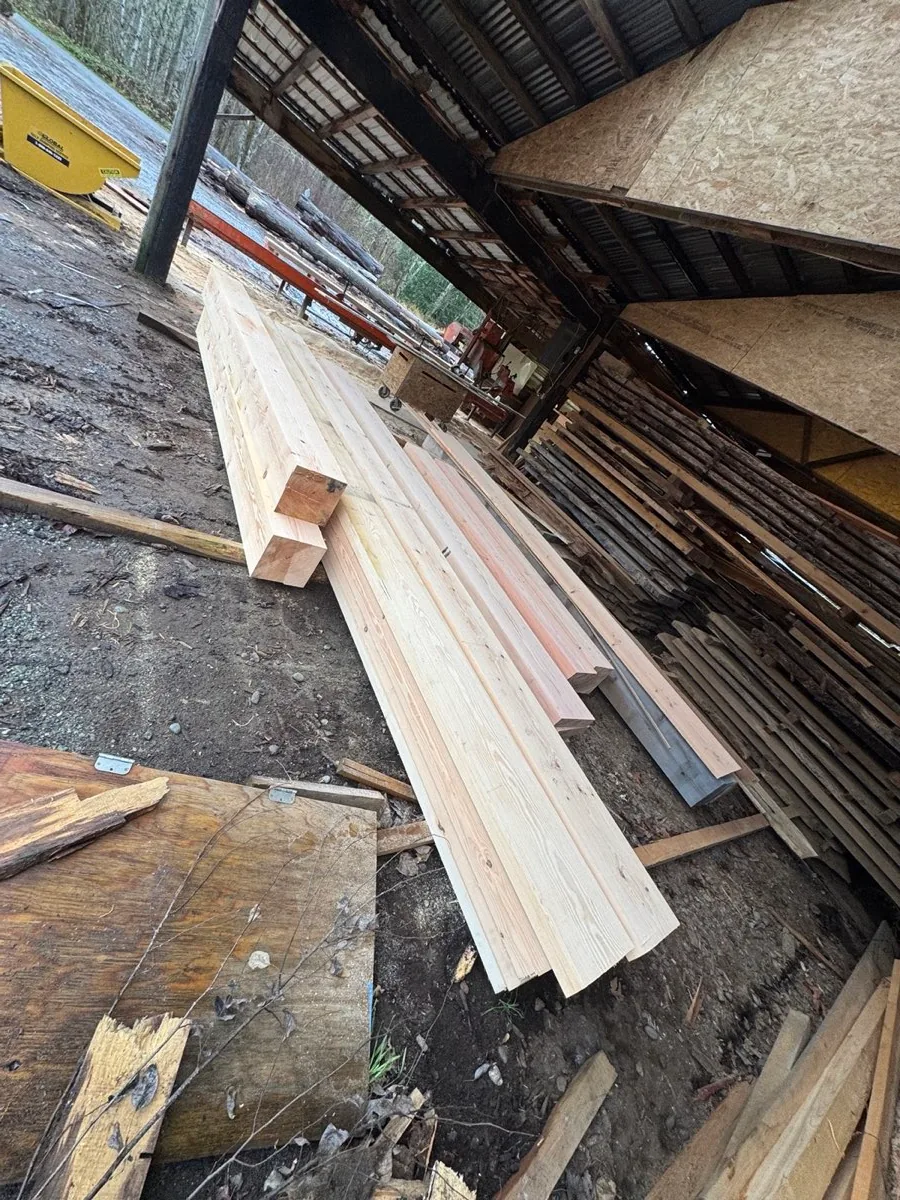
Why we can hold a number when others can’t
Here’s what’s genuinely different about building an ADU with us.
Svensen mills its own oversized Douglas Fir at Washington Timber Company in Arlington and engineers structures in-house. When timber prices move — and over the last few years they’ve moved hard — that volatility hits us, before it ever reaches your quote. We’re not passing a lumber-yard invoice through to you with a markup stapled on top.
That’s the entire reason we can offer the Timber Collection as defined tiers instead of an open-ended bid. When the most expensive structural material in the project is one we make ourselves, we can actually keep a promise on cost. We wrote a whole piece on why we mill our own timber if you want the full story on what that vertical integration means.
Don’t forget the soft costs
The building isn’t the whole budget. Plan for:
- Design and engineering — architectural plans that meet your city’s requirements.
- Permits — these vary widely by jurisdiction; a city lot in Lynnwood and a rural Snohomish parcel are different permit conversations entirely.
- Utility connections — often the single most underestimated cost on a detached unit.
- A real contingency. Custom means discovery. A realistic project holds money back for what no one can see until the ground is open.
The good news under HB 1337: in many jurisdictions, ADUs are now exempt from or capped on impact fees (limited to 50% of what the primary home would pay), which removes a cost that used to sting.
Is an ADU worth it?
For a lot of Washington homeowners, the answer is now clearly yes — which is exactly why the law changed. A detached unit can:
- Generate rental income — with owner-occupancy gone, you can rent both the ADU and the main house.
- House family — aging parents, adult kids, a private suite, without anyone moving out of the neighborhood.
- Add lasting property value — a well-built unit in real materials, on its own foundation, is an asset, not a shed.
The units that hold their value are the ones built to the same standard as a full custom home. A cheap cottage is a cheap cottage. A Svensen ADU is built like everything else we do — milled, engineered, and raised by our own crew.
The takeaway
Don’t shop ADUs on square-foot price alone. Shop on who controls the chain. The builder that owns its materials is the builder that can actually keep a promise on cost — and in a market where a detached unit is a $300,000-plus decision, a promise you can hold is worth more than the lowest opening bid.
Washington opened the backyard. The next move is a real number for your lot.
Related Reading
- ADUs & DADUs — The Timber Collection and how we build backyard units.
- What Does It Cost to Build a Custom Home in Snohomish County? — The full-home version of this cost breakdown.
- Why We Mill Our Own Timber — How owning the sawmill lets us hold a price.
- The Svensen Difference — One team, log to finished build.
- Service Areas — Where we build across Western Washington.
Thinking about a backyard build? Tell us about your lot and we’ll give you a straight number.