
Choosing a Custom Home Builder in Snohomish County
Svensen ·
Most guides to picking a builder hand you a checklist of licenses and references. Those matter. But they miss the question that actually decides how your project goes: who controls the material, the engineering, and the crew? Here’s how to tell a real custom home builder from a company that just assembles one.
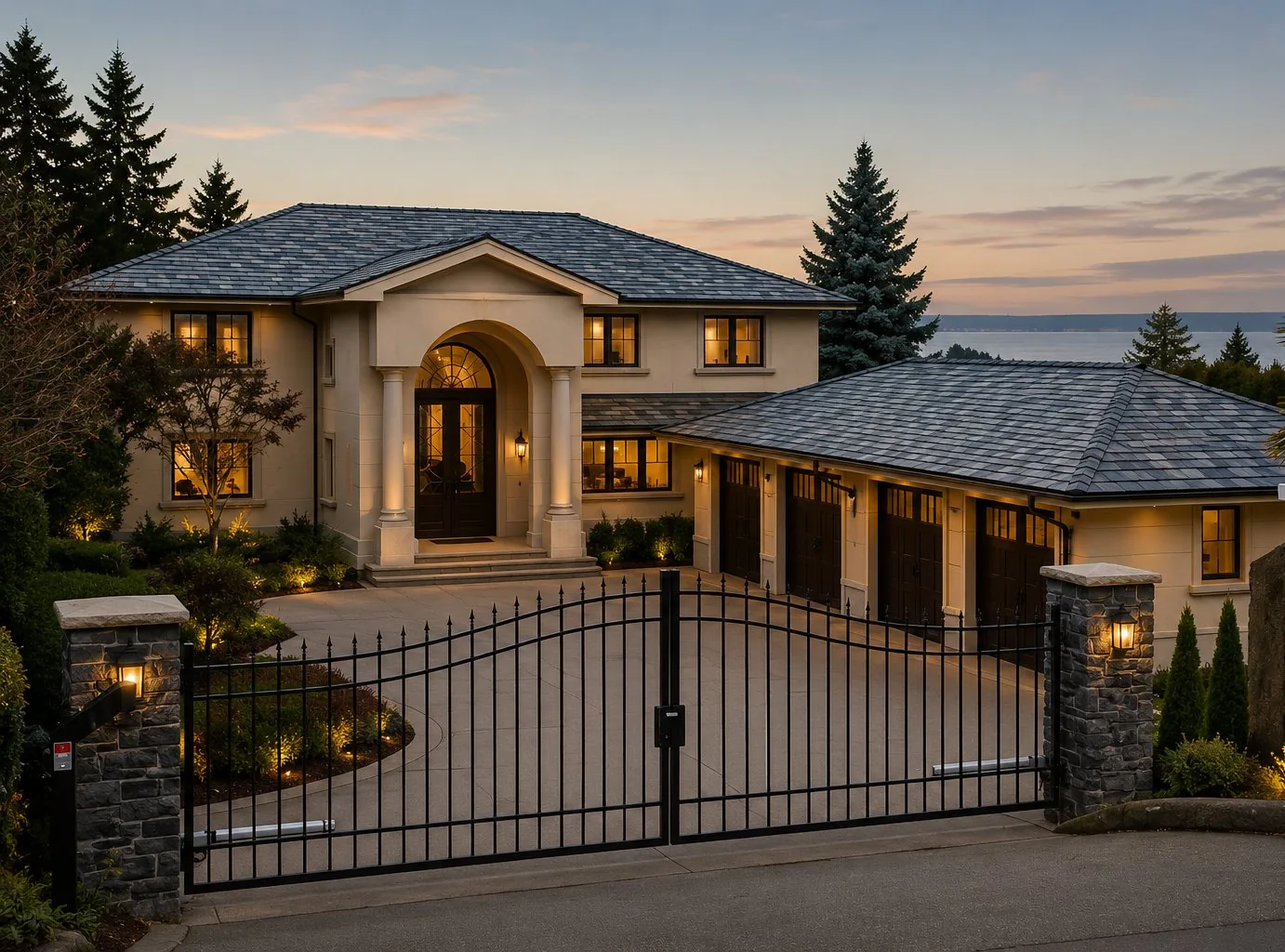
When you hire a custom home builder, you are not really buying a house. You are handing one company control of your budget, your schedule, and your standard of quality for the next twelve to eighteen months. The build is downstream of that decision. Get the builder right and the rest tends to follow. Get it wrong and no amount of good intentions on your part will fix it once the concrete is poured.
So the real work happens before anything is built — in how you vet the people asking to run your project. Below are the questions that actually separate a custom home builder from an assembler, and why, in Snohomish County specifically, the answers carry more weight than most homeowners realize.
First, the checks everyone tells you to make
Start with the basics, because they filter out real risk:
- Verify the Washington contractor registration. Every legitimate builder carries an active, bonded, and insured registration through Washington L&I. Ask for the number and confirm it yourself — it takes two minutes on the L&I site and tells you whether the bond and insurance are current.
- Ask for local references you can actually visit. Not a portfolio of photos — addresses and past clients in Snohomish County who will talk to you. A builder with real local work has nothing to hide here.
- Get honest timelines, not optimistic ones. A builder who promises exactly what you want to hear on schedule is telling you what closes the deal, not what’s true.

These are necessary. They are also where most “how to choose a builder” advice stops. The problem is that plenty of companies pass all three and still deliver a project that goes over budget and loses the details that made your design worth building. To catch that, you have to ask a different kind of question.
The question that actually separates builders: who controls the material?
Here is the one most homeowners never think to ask, and it’s the one that predicts the most: who actually mills and supplies the material your home is built from?
Ask it, and you’ll get one of two answers.
Most builders will say some version of “we source it.” They design your home, then go shopping for the material to build it — at whatever the lumber yard is charging that month, in whatever grades are in stock, on whatever lead times the market dictates. They are price-takers at the end of a long supply chain. When lumber spikes, either they absorb it or, far more often, you do. And when a key material is out of stock or quoted at a lead time that blows up your schedule, the design gets “value-engineered” down to something cheaper and more available. That is the moment a custom home quietly becomes an ordinary one.
The other answer is rarer, and it changes everything.
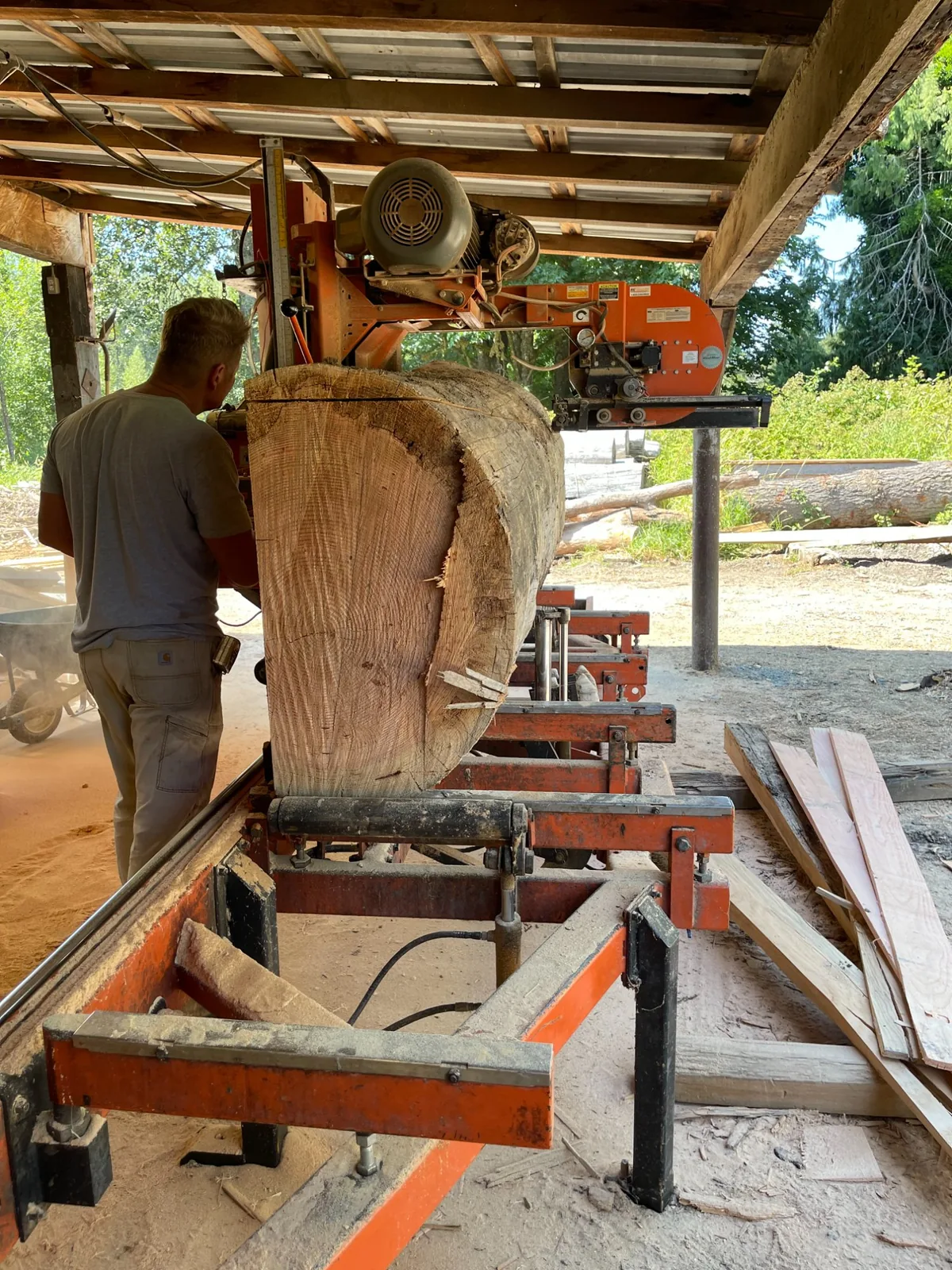
Svensen mills its own oversized Douglas Fir at Washington Timber Company in Arlington. We’re not shopping for your timber — we’re making it, cut to the dimension your design needs, to a grade we control, on our schedule. That single fact removes the “value-engineering” moment before it can happen.
The follow-up questions that reveal the whole chain
Once you’ve asked who controls the material, keep pulling the thread. Each of these exposes a handoff where a normal project loses money and accountability.
”Who engineers the structure?”
Most builders sub this out to a third party, then coordinate between the engineer, the supplier, and the framer — three companies that have never worked as one team. Every handoff is a place for the drawings and the material to fall out of sync. Svensen engineers its structures in-house through EV TimberShield, so the people specifying the frame and the people milling and raising it answer to the same standard.
”How many separate companies will my project pass through?”
This is the plain-language version of the same idea. In a typical build, the mill blames the yard, the yard blames the supplier, the framer blames the lumber, and you stand in the middle trying to figure out why your beam is late and over budget. Every layer also takes a margin — the mill, the wholesaler, the yard, the builder — so the most expensive structural material in your home arrives marked up several times over. Fewer companies in the chain means fewer markups and fewer people to point fingers when something goes wrong.
”What happens to my budget when material prices spike?”
Anyone who has built in the last few years knows how fast a quote can move. Ask a builder directly what happens to your number when the market jumps. An assembler has no good answer — they pass the volatility straight through to you. A builder who mills the most volatile, most expensive material themselves absorbs that swing upstream, before it ever reaches your contract.
Why vertical integration is the answer to all of it
Notice that every question above has the same solution. Own the sawmill, own the engineering, own the build crew — raw log to finished home, one company, one standard, one point of accountability.
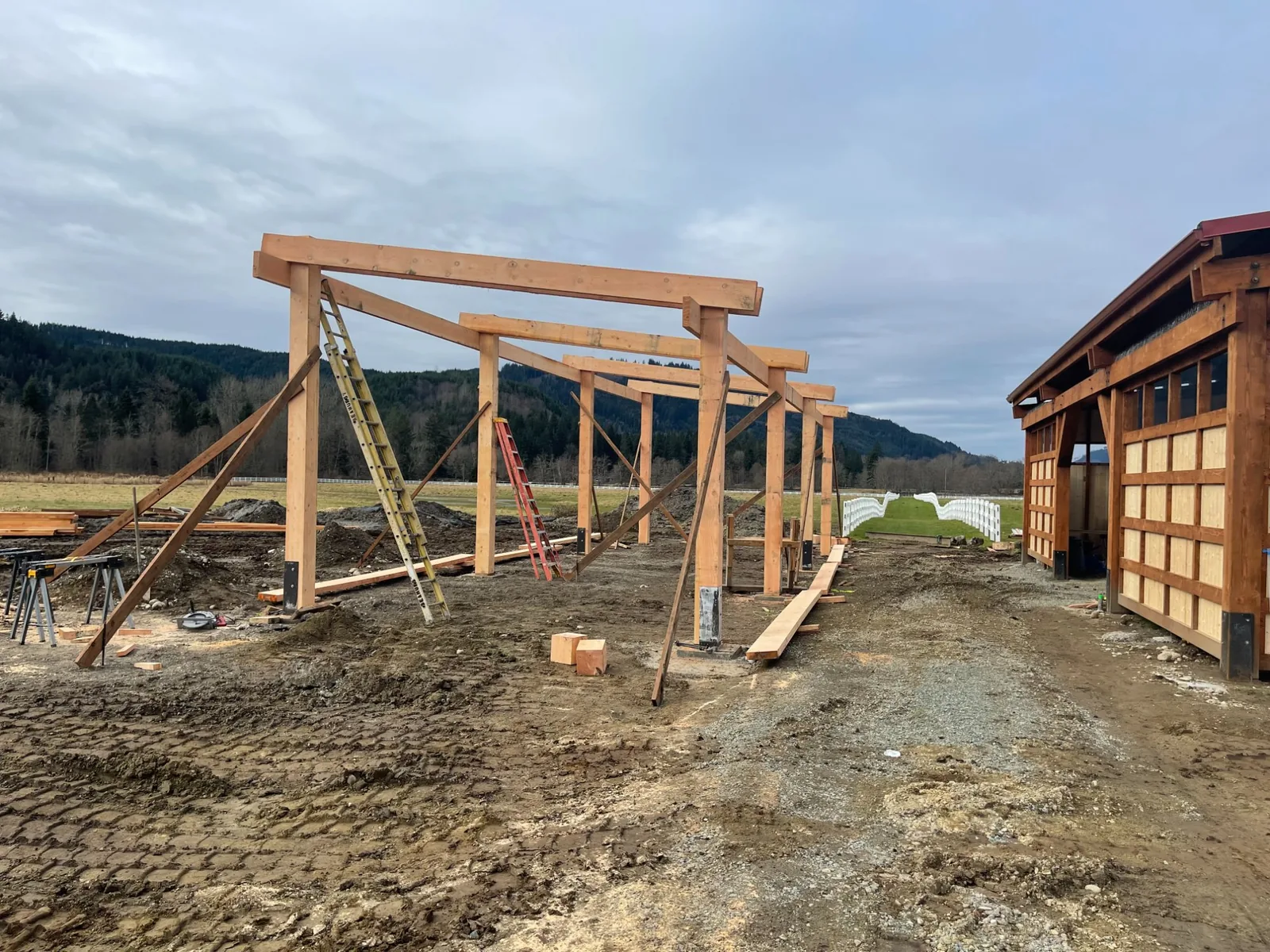
That’s what “vertical integration” means on an actual job site, stripped of the jargon. Most construction is the opposite: a chain of separate companies, each responsible for its piece and none responsible for the whole. When the same team mills the timber, engineers the structure, and raises the frame, there is no one left to pass the blame to. The log that comes off the truck in Arlington and the frame that goes up on your lot are the responsibility of one company. That’s the only way to hold cost, schedule, and quality at the same time — which is the entire job you’re hiring a builder to do.
Why this matters more in Snohomish County
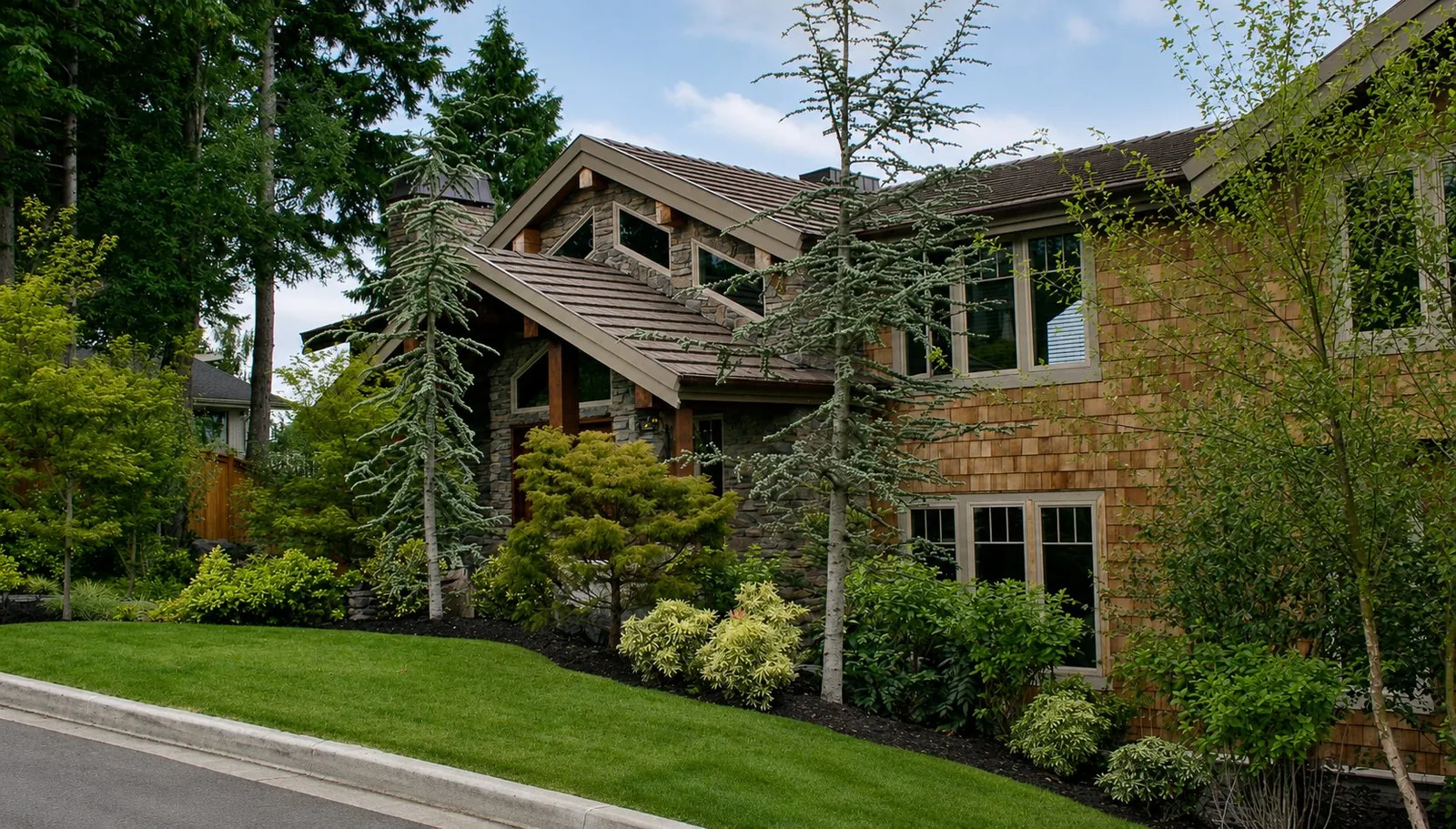
Snohomish County is not a uniform place to build. A lot in Mukilteo with a Sound view, a sloped parcel in Snohomish, an infill lot in Everett, and acreage out toward Arlington each come with their own soil, drainage, access, and permitting realities. A builder who controls their own supply chain can adapt to those site conditions without a supplier’s catalog dictating what’s possible — and can keep a straight budget while doing it.
It also means the timber is genuinely local. Milled in Arlington, engineered in-house, and raised across the county and the greater Puget Sound — no middlemen between the forest and your floor. When you’re choosing among custom home builders in Snohomish County, that local, end-to-end control is the difference between a builder who hopes the material shows up right and one who already knows, because they cut it.
The bottom line
The standard checklist — license, references, timeline — filters out the obviously risky. But the builder who delivers the home you actually designed is the one who controls the chain behind it. Ask who mills the material. Ask who engineers the frame. Ask how many companies your project passes through, and what happens to your budget when the market moves. The answers will tell you, before a single permit is pulled, whether you’ve found a custom home builder or just an assembler.
Related Reading
- Custom Homes — Ground-up custom and luxury homes across Snohomish County, milled and built in-house.
- Why We Mill Our Own Timber — What vertical integration actually means for your build.
- What Does It Cost to Build a Custom Home in Snohomish County? — How controlling materials keeps a budget honest.
- The Svensen Difference — One team, one supply chain, log to finished home.
- Our Work — See the homes across the Puget Sound.
Planning a custom home in Snohomish County? Start a conversation.