
Why We Mill Our Own Timber, and Why It Matters
Svensen ·
There’s a moment in almost every timber project where the budget gets tested — and it’s usually where the building loses the thing that made it special. We built our company specifically to remove that moment. Here’s how, and why it changes what you can actually build.
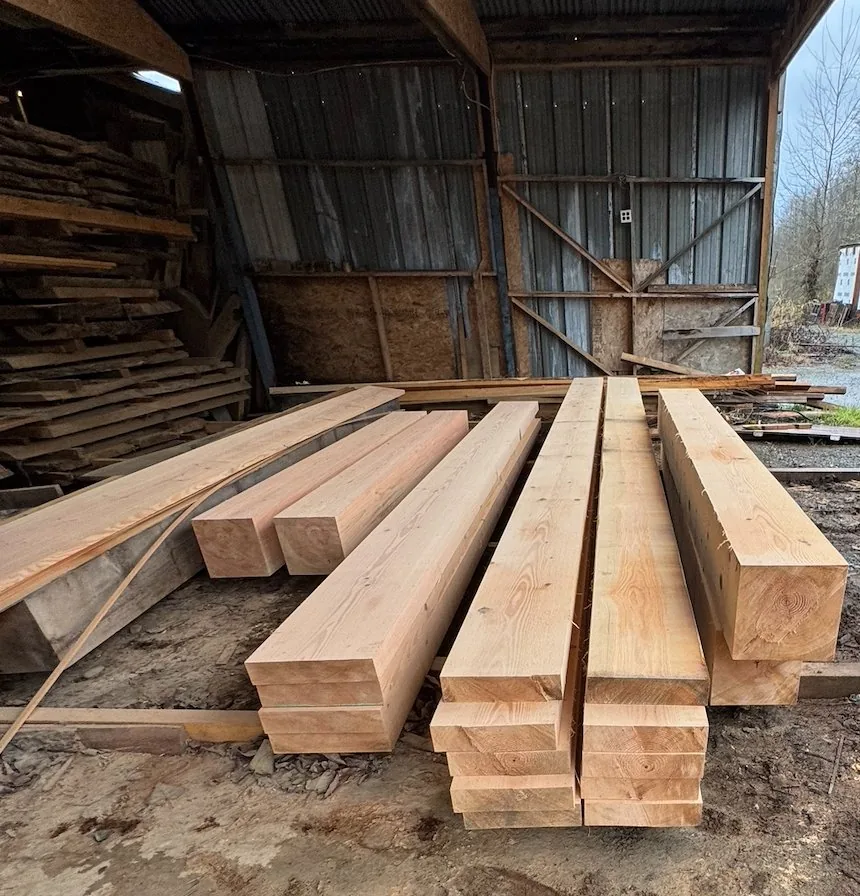
There is a moment in almost every timber project where the budget gets tested. The design calls for an oversized exposed beam. The supplier quotes a number that makes everyone wince. The lead time comes back at six weeks. And someone in the room suggests “value engineering” it down to something smaller, cheaper, and safer for the spreadsheet.
That moment is where most timber buildings quietly lose the thing that made them special. The beam that was supposed to be the centerpiece of the great room becomes a beam that’s merely adequate. Multiply that across a whole project and you end up with a house that’s fine — and forgettable.
We built our company to remove that moment entirely.
We own the sawmill
Most builders sit at the end of a long supply chain. They design a home, then go shopping for the material to build it — at whatever price the lumber yard is charging that month, in whatever grades happen to be in stock, with whatever lead times the market dictates. They’re price-takers. When lumber spikes, they eat it or you do.
Svensen mills its own oversized Douglas Fir at Washington Timber Company in Arlington. The beam in your great room is cut to the dimension your design needs, on our schedule, to a grade we control. We’re not shopping for your timber. We’re making it.
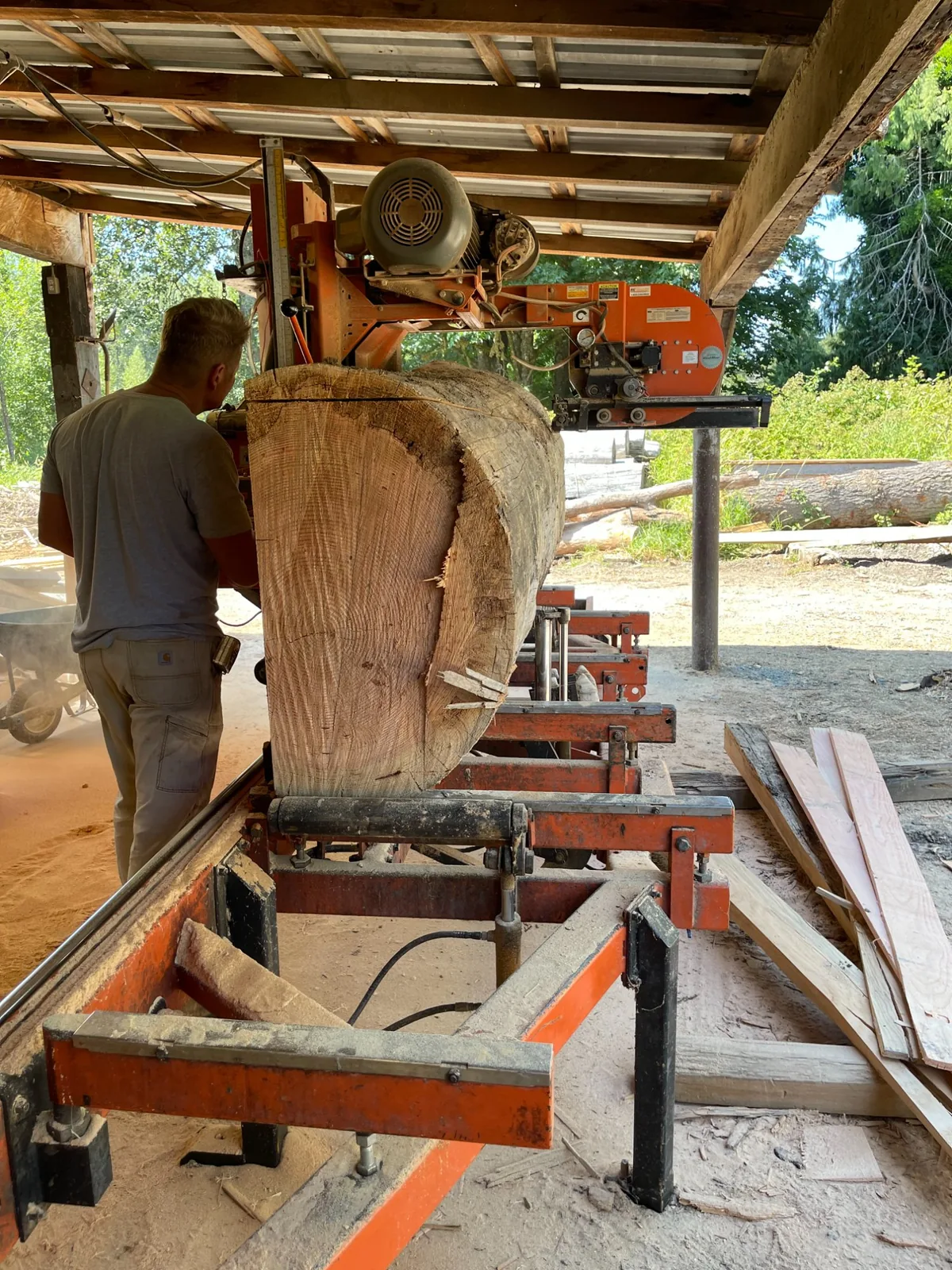
That single fact changes three things that matter to you.
No retail markup between you and the material
Every layer in a normal supply chain takes a margin — the mill, the wholesaler, the yard, the builder. By the time an oversized timber reaches a typical job site, it’s been marked up several times. When we mill our own, those layers collapse into one. The most expensive structural material in your project doesn’t carry four markups; it carries ours, once.
No “out of stock” forcing a redesign
Anyone who’s built in the last few years knows the pain of a material that simply isn’t available, or is quoted at a lead time that blows up the schedule. When the timber comes from our own mill, “out of stock” isn’t a sentence we have to say to you. We cut what your design needs when the project needs it.
No grade surprises when it shows up on site
Buy timber sight-unseen and you’re trusting someone else’s grading. Sometimes what arrives isn’t what the drawings assumed, and now you’re solving a problem mid-build. We control the grade because we control the mill. What your engineer specified is what gets cut.
Vertical integration, in plain terms
“Vertical integration” sounds like an MBA phrase, so here’s what it actually means on a job site: own the sawmill, own the engineering, own the build crew. Raw log to finished frame, one company, one standard, one point of accountability.
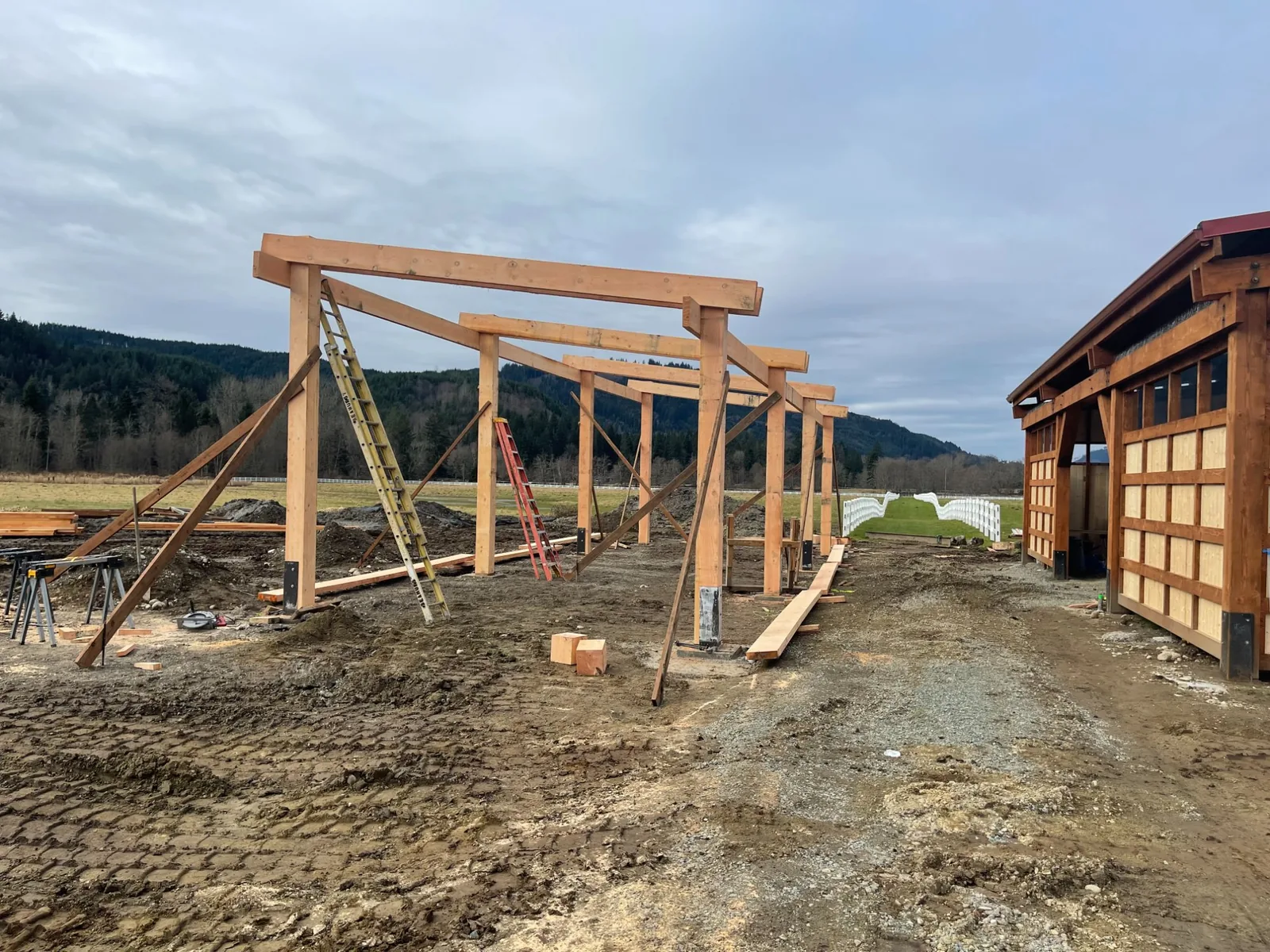
Most construction is the opposite — a chain of separate companies, each responsible for its piece and none responsible for the whole. The mill blames the yard, the yard blames the supplier, the framer blames the lumber, and you’re standing in the middle trying to figure out why your beam is late and over budget.
When the same company mills the timber, engineers the structure, and raises the frame, there’s no one to pass the blame to. The log that comes off the truck in Arlington and the frame that goes up on your lot are the responsibility of one team. That’s not just cleaner — it’s the only way to actually hold cost, schedule, and quality at the same time.
What this means for your build
Here’s how it shows up in the finished project:
The frame reads like the centerpiece it was designed to be. Because we never had to “value-engineer” your beams down to hit a lumber quote, the exposed structure in your timber frame home is the size the architecture intended — generous, present, the thing people notice when they walk in.
Your budget holds. The most volatile, most expensive structural material in the project is one we make ourselves, insulated from the market swings that wreck other builders’ quotes mid-project. That predictability is exactly what lets us give straight numbers on custom homes and price our ADU Timber Collection as real tiers.
The timber is genuinely local. Milled in Arlington, engineered in-house, raised across the Puget Sound. No middlemen between the forest and your floor.
The honest bottom line
Owning a sawmill is not the easy way to run a construction company. It’s capital, equipment, expertise, and responsibility that most builders are happy to leave to someone else. We took it on because it’s the only way to make the promise we actually want to make: that the frame you designed is the frame you’ll get, at a price that doesn’t move on you, on a schedule we control.
Most builders hope the grade is right when the truck shows up. We already know — because we cut it.
Related Reading
- Timber Frame Construction — Heavy-timber homes and structures, milled and raised in-house.
- Timber Frame vs. Conventional Framing — Which structure is right for your build.
- What Does It Cost to Build a Custom Home in Snohomish County? — How controlling materials keeps a budget honest.
- The Svensen Difference — One team, one supply chain, log to finished home.
- Our Work — See the frames across the Puget Sound.
Planning a timber-frame home or commercial space? Start a conversation.